
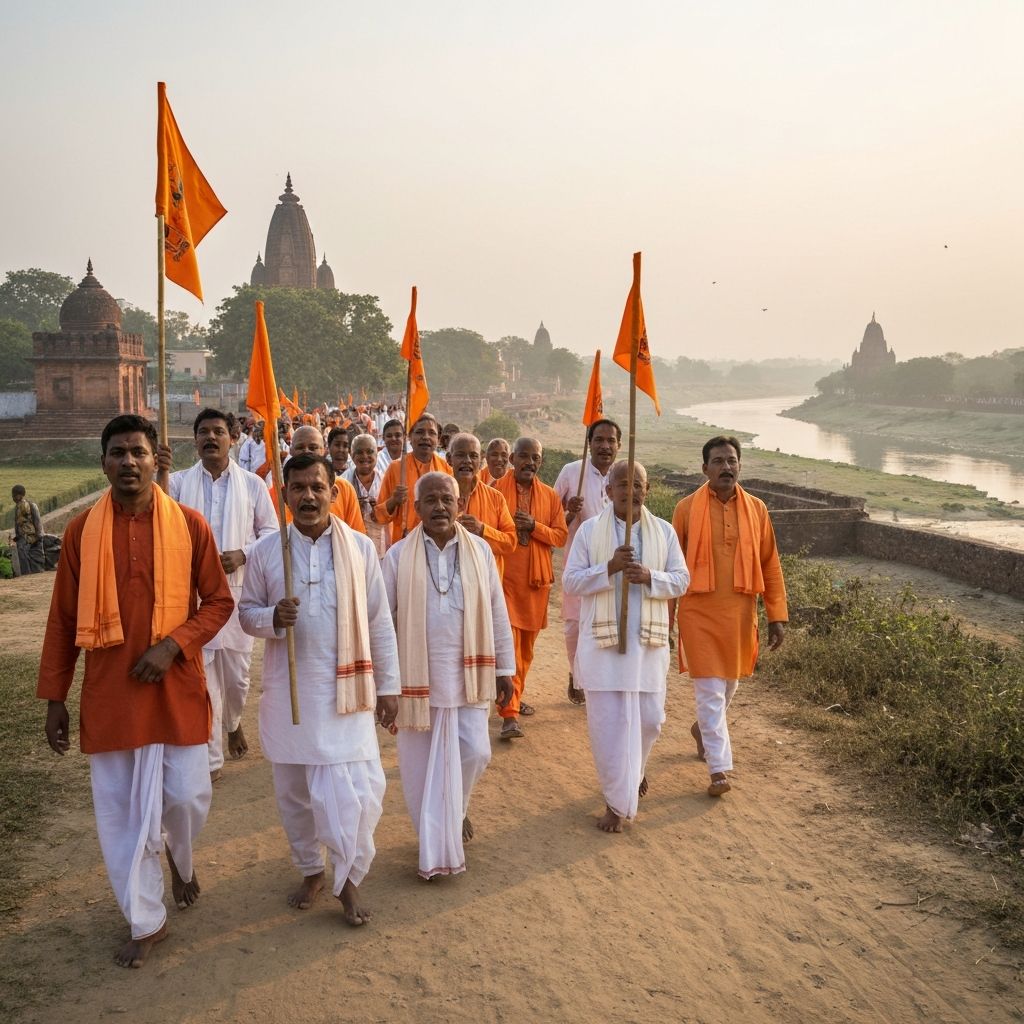
My First Nabadwip Parikrama Experience
 Nabaday Halder
The Call to Pilgrimage
I had read about Nabadwip Dham for years—the sacred nine islands, the birthplace of Sri Chaitanya, the origin of the sankirtan movement. But reading is one thing; walking the holy land is another entirely.
When I finally committed to undertaking the Nabadwip Dham Parikrama during Gaura Purnima, I had no idea how profoundly it would change me.
Arrival and Preparation
I arrived at Mayapur three days before the parikrama was to begin. The ISKCON campus was already buzzing with devotees from across the globe—Russians, Americans, Indians, Africans, South Americans—all united by a common love for Sri Chaitanya Mahaprabhu.
The preparation involved:
- Registering with the parikrama organizers
- Receiving the route map and schedule
- Getting basic supplies (water bottle, comfortable shoes, light clothing)
- Mentally preparing for 4-5 days of walking
The organizers emphasized: "This is not a tourist walk. It is a meditation. Walk slowly, chant constantly, and be open to the dham's mercy."
Day One: Antardwip
We assembled at 4:30 AM, thousands of us, in the pre-dawn darkness. The sound of mridangas and kartals filled the air as the kirtan party led us out of the campus.
Our first stop was Yogapitha—the exact spot where Sri Chaitanya appeared 500 years ago. Standing in that small temple, surrounded by weeping devotees, I felt something shift inside me. This was no longer history; it was living presence.
Throughout the day, we visited:
- Jagannath Mishra's house
- Sachimata's residence
- The neem tree under which Nimai (young Chaitanya) played
By evening, my feet ached, but my heart was strangely light.
Day Two: Simantadwip and Godrumadwip
The second day tested my physical limits. We crossed rivers by boat, walked through villages where locals offered us water and prasadam, and visited ancient temples hidden in groves.
At Simantadwip, we heard the story of how Parvati (Simantini Devi) received the dust of Nabadwip on the parting of her hair—hence the name "Simanta" (hair parting).
The highlight was Surabhi Kunj in Godrumadwip, where Bhaktivinoda Thakur had his bhajan kutir (meditation cottage). Sitting where this great saint had chanted, I felt the accumulated devotion of the place.
Day Three: Madhyadwip and Koladwip
Rain came on the third day. Some pilgrims took shelter, but many of us continued, seeing the rain as the dham's blessing. Walking through ankle-deep mud, chanting through wet clothes, something in me surrendered.
I realized: the parikrama was not about comfort but about resilience in devotion.
Koladwip held special significance—it is said to be identical to Govardhana Hill in Vrindavan. We circumambulated the sacred sites, offering respects at each spot where Sri Chaitanya had performed his divine pastimes.
Day Four: Rtudwip, Jahnudwip, and Modadrumadwip
By the fourth day, a rhythm had established itself. Wake at 3:30, morning program, breakfast prasadam, and then walk. The constant chanting had become as natural as breathing.
At Jahnudwip, we visited the ashram of Jahnu Muni, who had swallowed and released the Ganga (hence she is also called Jahnavi).
The devotee beside me, an elderly Bengali woman who had done parikrama for 40 years, told me: "Every year, the dham reveals something new. It depends on your heart's readiness."
Day Five: Rudradvip and Return
The final day. We visited the birthplace of Lord Nityananda at Ekachakra (a side trip) and then completed the circumambulation at Rudradvip, where Lord Shiva eternally worships Sri Chaitanya.
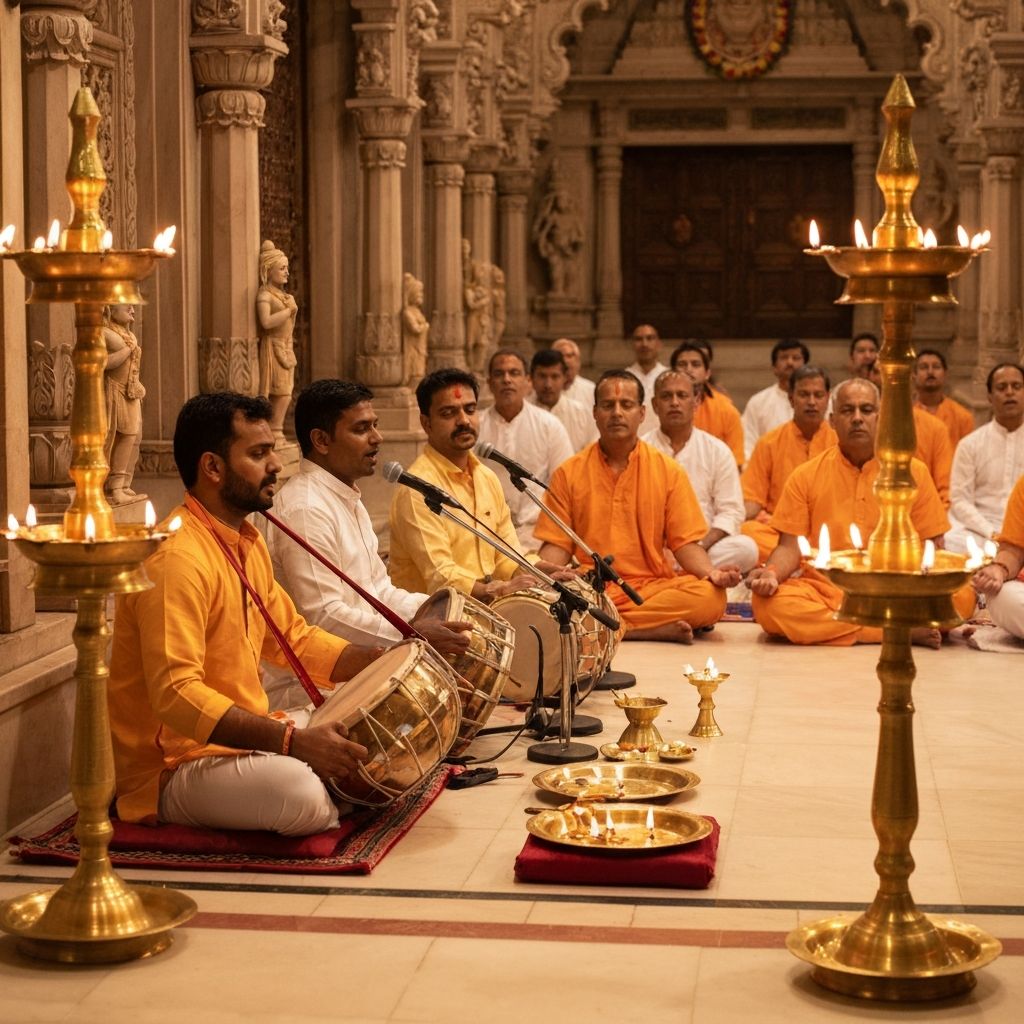
As we re-entered Mayapur, the evening arati was beginning at the main temple. Thousands of pilgrims, having completed the same journey, sang together in the golden glow of countless lamps.
I wept. Not from sadness but from a fullness I had never known.
What Parikrama Teaches
Surrender
You cannot control the parikrama—the weather, your body, the schedule. You can only surrender and keep walking.
Community
The shared hardship creates bonds that transcend social differences. Wealthy businessmen walked beside village farmers; PhD scholars beside illiterate saints.
Presence
With no phones (strongly discouraged), no entertainment, just walking and chanting, the mind eventually settles into a profound presence.
Gratitude
Every glass of water becomes precious. Every moment of rest becomes sacred. Every kindness becomes a divine gift.
Practical Advice for First-Timers
- Physical preparation: Start walking daily at least a month before
- Pack light: You'll carry everything you bring
- Good footwear: Broken-in, comfortable walking shoes are essential
- First aid basics: Blister pads, pain relievers, ORS packets
- Open mind: Let go of expectations and comfort requirements
- Join a group: Walking alone is possible but walking with sangha is transformative
The Return Home
I returned home physically exhausted but spiritually recharged. The effects didn't fade. Even now, months later, I find myself returning to those moments—the dawn chanting, the river crossings, the village temples, the collective devotion.
Nabadwip Dham Parikrama is not a vacation. It is a pilgrimage in the truest sense—a journey that changes you forever.
"One who circumambulates Nabadwip Dham with devotion achieves the perfection of all pilgrimages and attains pure love for Krishna." — Navadvipa Dham Mahatmya
Found this article helpful? Share it with others on their spiritual journey.
Continue Your Spiritual Journey
 Spiritual Practice
The Power of Chanting Hare Krishna Mahamantra
Discover why the Hare Krishna maha-mantra is considered the most powerful method for spiritual realization in this age of Kali Yuga.
 Fasting & Health
Why Ekadashi Fasting Transforms Your Life
Learn the ancient science behind Ekadashi fasting and how this simple practice can purify your body, mind, and consciousness.